
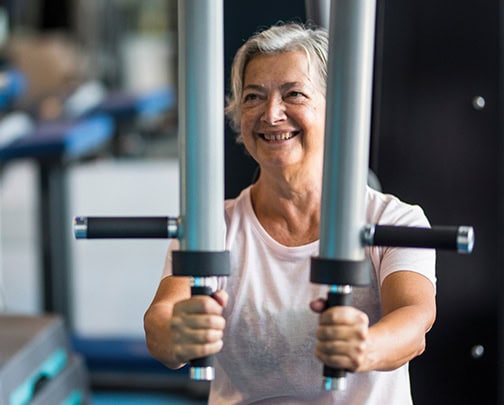
Osteoporosis and osteopenia are incredibly common, but the good news is that exercise – done the right way – can make a meaningful difference to your bone health. Many people feel unsure or even fearful after receiving a diagnosis, wondering what movements are safe and which should be avoided. The reality? With the right guidance, exercise becomes one of the most powerful tools you have to improve bone mineral density and maintain independence.
The two types of training that matter most are resistance training and impact exercise. Resistance training uses external load to stimulate your bones and muscles to adapt – typically through lifting weights or using resistance machines. Impact exercise – such as hopping or controlled jumps – adds a mechanical stimulus that bones respond to by becoming denser and more resilient.
We now have high‑quality evidence supporting this approach. The LIFTMOR trial, along with its follow‑up studies, demonstrated that high‑intensity resistance training combined with impact loading is not only safe for individuals with low bone density – it’s the gold standard of conservative care. These programs led to measurable improvements in bone mineral density, strength, functional balance, and posture.
Because the intensity required for meaningful bone change is higher than many people expect, working with an exercise physiologist is essential. We can tailor programs to your diagnosis, confidence level, and physical capacity, ensuring every session is both safe and effective.
You don’t have to tiptoe around osteoporosis. With the right exercises and the right support, you can build stronger bones and more confidence with every session.
Pro Exercise SA services are available from the following Pro Health Care locations; Kidman Park, Hope Valley, Mitcham, Aldinga and now open in Salisbury!