
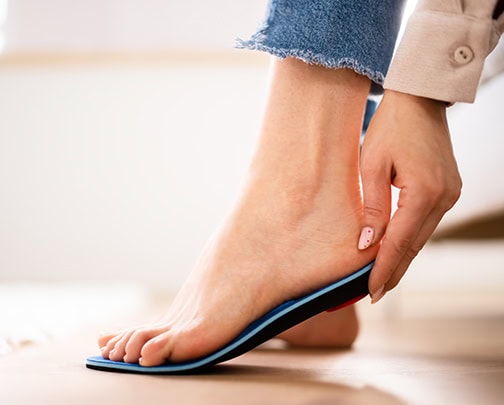
Many people wonder whether custom orthotics are necessary or if off-the-shelf insoles can help. Podiatrists assess factors such as foot structure, walking patterns, pain location, and activity demands to determine which option may be appropriate. In some cases simple insoles provide enough support, while more complex conditions may benefit from customised orthotics and ongoing adjustments.
Foot discomfort is a common reason people seek podiatry care. Some notice pain during exercise, while others feel discomfort after long hours standing at work or walking in certain shoes.
When researching solutions, many people come across two main options: off-the-shelf insoles and custom orthotics. Because both are designed to provide support inside footwear, it is understandable that patients often wonder which one may be appropriate.
The decision is rarely based on preference alone. Instead, podiatrists evaluate how the feet function during everyday movement and how that movement relates to symptoms. This assessment helps determine whether a simple insole may provide adequate support or whether a more personalised orthotic device may be considered.
For people experiencing ongoing foot discomfort, an assessment through the podiatry team providing podiatry care in Adelaide can help identify the underlying cause and guide appropriate management.
Why Many People Start With Insoles
Off-the-shelf insoles are widely available in pharmacies and sports stores. These inserts are designed to provide general cushioning and basic arch support for common foot shapes.
For some people, these products may offer enough support to improve comfort, particularly when symptoms are mild or related to footwear. Individuals who spend long hours standing at work or walking on hard surfaces may benefit from additional cushioning that helps distribute pressure more evenly across the foot.
Because insoles are easy to access and simple to use, many people try them before seeking professional assessment. In certain situations this approach may provide temporary relief.
However, when discomfort continues or returns repeatedly, it may suggest that the underlying cause involves more specific biomechanical factors that require closer evaluation.
What Makes Custom Orthotics Different
Custom orthotics are medical devices designed to match the individual structure and function of a person’s feet. Rather than providing generalised support, they are created using measurements or scans taken during a clinical assessment.
The purpose of a custom orthotic is not simply to cushion the foot. Instead, it is designed to influence how forces are distributed during walking, standing, or sporting activity.
These devices may be considered when symptoms are linked to issues such as:
- Abnormal Foot Alignment
- Repetitive Strain During Walking Or Running
- Chronic Heel Pain
- Tendon Overload In The Foot Or Ankle
- Structural Conditions Affecting Foot Mechanics
Because every person’s movement pattern is different, orthotics are typically designed to address the specific mechanics contributing to symptoms.
Patients who require this level of support are often assessed and fitted through specialised podiatry services such as custom orthotics for foot pain, where the device can be tailored to the individual’s foot structure and activity demands.
How Podiatrists Assess Foot Mechanics
Determining the most appropriate support begins with a clinical evaluation. During this process, a podiatrist examines several aspects of foot function.
Foot Structure
The overall structure of the foot can influence how weight is distributed when standing or walking. Some individuals have higher arches, while others have flatter arches or more flexible feet. These differences can affect how the foot absorbs and transfers load.
Walking And Movement Patterns
Observing how someone walks often provides valuable information. Subtle changes in gait can reveal how the foot interacts with the ground and whether certain structures are under increased stress.
Location Of Pain
The location of discomfort can also guide treatment decisions. Pain at the heel, arch, forefoot, or ankle may point toward different mechanical causes that require different levels of support.
Activity Demands
Daily activities play an important role in deciding whether additional support may help. Someone who runs regularly, works on hard surfaces, or participates in sport may place greater strain on the feet compared with someone whose activities are less repetitive.
By considering all of these factors together, a podiatrist can determine whether a general insole is likely to provide adequate support or whether a custom orthotic device may offer more targeted assistance.
Situations Where Insoles May Be Sufficient
Not every foot condition requires a customised orthotic device. In certain situations, an off-the-shelf insole may provide enough support to improve comfort.
Examples may include:
- Mild Fatigue After Prolonged Standing
- Temporary Irritation Related To Footwear
- Early Stages Of Foot Discomfort Without Structural Imbalance
- Situations Where Cushioning Rather Than Mechanical Correction Is Needed
In these cases, a podiatrist may recommend specific types of insoles or footwear adjustments rather than prescribing a custom orthotic.
The goal is always to match the level of support to the underlying problem rather than automatically choosing the most complex solution.
When Custom Orthotics May Be Considered
There are circumstances where off-the-shelf products do not provide enough support to address the underlying mechanical issue.
Custom orthotics may be considered when:
- Pain Persists Despite Footwear Changes Or Insoles
- Symptoms Repeatedly Return After Activity
- There Is A Structural Foot Imbalance Affecting Walking Mechanics
- Tendons Or Joints In The Foot Are Under Repeated Strain
- A Person’s Work Or Sport Places High Loads On The Feet
In these situations, a device designed specifically for the individual’s foot structure may help improve how forces are distributed during movement.
Why Follow-Up Adjustments Matter
One of the important differences between generic insoles and custom orthotics is the ability to make adjustments over time.
Foot mechanics can change as symptoms improve, activity levels change, or footwear is modified. Because orthotics are designed as part of an ongoing treatment approach, podiatrists may review and adjust them to ensure they continue to provide appropriate support.
This follow-up process can be particularly important for people returning to sport, increasing their activity levels, or managing long-standing foot conditions.
Orthotics Are Often Part Of A Broader Treatment Plan
While orthotics can provide valuable support, they are rarely the only component of treatment. Foot discomfort often improves most effectively when several strategies are combined.
Depending on the underlying cause, a podiatrist may also recommend:
- Strengthening Exercises For The Foot And Ankle
- Stretching Programs To Improve Flexibility
- Footwear Adjustments
- Activity Modifications During Recovery
- Advice On Managing Pressure Or Load Through The Feet
This comprehensive approach focuses on addressing the factors that contribute to symptoms rather than relying on a single intervention.
Podiatry Clinics Across Adelaide
Pro Health Care provides podiatry services across Adelaide at clinics located in Beverley, Dover Gardens, Henley Beach, Hope Valley, Kidman Park, Mitcham, North Adelaide, Norwood, and Stirling.
Choosing The Right Option For Your Feet
For many people, the biggest question is not whether orthotics or insoles are “better,” but which option matches their specific needs.
Some individuals experience meaningful relief with simple insoles, while others benefit from a personalised orthotic device designed to address underlying biomechanics. Because foot structure, movement patterns, and activity demands vary widely between individuals, the most appropriate solution often becomes clear only after a clinical assessment.
A podiatrist can evaluate how the feet function during daily activities and provide guidance on the type of support that may help improve comfort and movement over time.
Frequently Asked Questions
Are custom orthotics always necessary for foot pain?
Not always. Some people experience relief with footwear adjustments or off-the-shelf insoles. A podiatrist can help determine whether more personalised support may be appropriate based on how the feet function during movement.
Do orthotics cure foot problems?
Orthotics are designed to support foot mechanics and help reduce strain on certain structures. They are often used alongside exercises, footwear advice, and activity modifications as part of a broader treatment plan.
How long does it take to get used to orthotics?
Many people need a short adjustment period when first using orthotics. Gradually increasing wear time allows the feet and lower limbs to adapt to the new support.
Can orthotics be used in different shoes?
This depends on the design of the orthotic and the type of footwear being worn. A podiatrist may recommend certain shoe styles that allow the orthotic device to function effectively.
Disclaimer: This article provides general information about foot support options such as orthotics and insoles. It is not intended as medical advice or a substitute for professional assessment. Foot conditions vary between individuals, so diagnosis and treatment recommendations should always be provided by a qualified healthcare professional.