
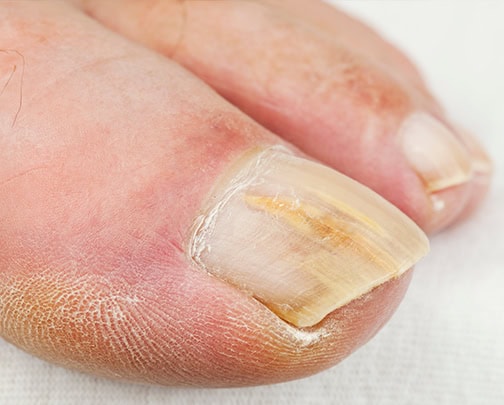
Not every thick, yellow or discoloured toenail is suitable for laser treatment. Similar nail changes can develop from fungal infection, repeated trauma, pressure, skin conditions or other causes. A podiatry assessment helps establish what may be affecting the nail before determining whether laser therapy or another management option should be considered.
A toenail becomes yellow, thick or brittle, and fungal infection seems like the obvious explanation. From there, it can be tempting to jump directly to antifungal products or laser treatment.
The difficulty is that nails have a limited vocabulary when something goes wrong. Repeated pressure from footwear, an old injury, fungal infection and some skin conditions can all produce nails that look thickened, distorted or discoloured.
That makes the appearance of the nail a starting point, not a diagnosis.
Before discussing podiatry laser therapy, a podiatrist needs to consider what is most likely causing the change, how much of the nail is involved, whether other nails or skin are affected and what treatment has already been tried.
A Nail Can Look Fungal Without Fungus Being the Cause
Fungal nail infection, known clinically as onychomycosis, can cause yellow or brown discolouration, thickening, brittleness, crumbling and separation of the nail from the underlying nail bed.
Unfortunately, those characteristics are not unique to fungal infection.
Consider a runner whose second toenail repeatedly strikes the front of the shoe. Over time, the nail can thicken and change colour. Someone who dropped a heavy object on a toe months earlier may notice abnormal nail growth long after the original bruising has settled. Repetitive pressure from restrictive footwear can also alter the nail plate.
The distinction matters because a treatment directed at fungus will not address a nail whose main problem is mechanical trauma.
Patients arranging an assessment through an Adelaide podiatry clinic can have the nail considered in the context of their symptoms, footwear, health history and previous treatment rather than relying on appearance alone.
The Pattern Across Your Feet Provides Useful Clues
A podiatrist does not necessarily look at one nail in isolation.
The distribution of changes can provide useful clinical information. One damaged nail following an injury presents differently from several gradually thickening nails accompanied by changes to the surrounding skin.
During an assessment, the podiatrist may consider:
- How long the nail has looked different
- Whether the change began suddenly or gradually
- How many nails are involved
- Whether the nail is brittle, crumbly or separating
- Any pain, pressure or tenderness
- Previous injuries to the toe
- Sporting and occupational demands
- Footwear worn regularly
- Skin changes between or around the toes
- Previous antifungal treatments and the response to them
- Medical conditions or medications relevant to foot and nail health
These details help establish whether fungal infection appears likely and whether further investigation or a different form of care should be considered.
Trauma Often Gets Forgotten Once the Bruise Disappears
Toenails grow slowly. An injury that happened months ago can still influence what the nail looks like today.
A direct impact may cause bleeding beneath the nail, temporary separation or damage to the area responsible for nail growth. Repeated smaller impacts can have a similar cumulative effect.
This is common in activities where toes repeatedly contact the front of a shoe, including running, hiking and some court sports. Work boots or other rigid footwear can create comparable pressure when fit is poor.
Patients may not connect the nail change with trauma because there was never one dramatic injury.
A useful podiatry assessment therefore asks not only, “When did the nail turn yellow?” but also what was happening to the foot in the months before the visible change appeared.
If ongoing shoe pressure appears relevant, appropriate footwear advice may form part of management rather than treating the nail in isolation.
Laser Treatment Should Follow the Clinical Question
The question is not simply whether laser technology can be applied to a nail. It is whether the suspected condition is one for which that treatment is clinically appropriate.
At Pro Health Care, Lunula Laser Therapy is available as a podiatry treatment option for fungal nail concerns. Suitability needs to be considered individually.
A podiatrist may take into account the extent of nail involvement, previous treatment, general health and whether the visible changes are consistent with fungal infection.
This matters because choosing treatment before considering the likely cause can lead to a frustrating cycle. The nail still looks abnormal, another product or procedure is tried, and the original reason for the change remains unresolved.
Podiatrist laser treatment is better understood as one possible option within a clinical plan, not as a universal treatment for every damaged-looking toenail.
Thick Nails Can Create a Mechanical Problem as Well as a Nail Problem
Thickness itself can become troublesome regardless of the underlying cause.
A bulky nail occupies more space inside footwear. Pressure from the upper of the shoe can make the toe tender, particularly during longer periods of walking or running. A curved or distorted edge may irritate the surrounding skin.
In some cases, reducing excessive nail thickness as part of routine podiatry care may improve comfort while the underlying condition is being assessed or managed.
A thickened nail can also coexist with an ingrown edge. Where pain is concentrated along the side of the nail rather than through the nail plate itself, assessment for an ingrown toenail may be more relevant than assuming fungus is responsible.
The important point is that several problems can occur in the same toe. One label does not necessarily explain every symptom.
Nail Colour Alone Is an Unreliable Treatment Guide
Yellow is often associated with fungus, but colour variation can occur for other reasons.
A traumatised nail may become dark after bleeding beneath it. Thickened nails can look yellow because the structure and transparency of the nail have changed. Debris beneath a partially separated nail can further alter its appearance.
A persistent dark mark, a rapidly changing area of pigmentation or an unexplained change that concerns you should be professionally assessed rather than self-treated on the assumption that it is fungal.
Podiatrists assess common nail disorders, but some findings may warrant evaluation by a general practitioner, dermatologist or another appropriate healthcare professional. Recognising when a problem falls outside routine podiatry management is part of responsible clinical care.
Previous Treatment Gives the Podiatrist More Information
Someone considering podiatry laser treatment in Adelaide may already have tried pharmacy nail preparations or another approach.
That history is useful.
A treatment that appeared to make no difference does not by itself prove that the nail is not fungal. Toenails grow slowly, some infections are difficult to manage, and treatment effectiveness can depend on several factors.
At the same time, repeatedly using antifungal products without confirming the likely diagnosis can delay assessment of another cause.
Bring details of previous treatment to the appointment where possible. That includes what was used, how long it was used for and whether any part of the nail changed during that period.
Photographs taken several months apart can also help show whether a nail is gradually growing differently or remaining largely unchanged.
Healthy-Looking Nail Growth Takes Time
One source of treatment frustration is expecting the damaged portion of a nail to suddenly look normal.
Treating the underlying problem and replacing the visibly affected nail are not the same process.
Toenails grow gradually from the base. Even when management is progressing appropriately, the older thickened or discoloured section must continue to grow forward before it can eventually be trimmed away.
For this reason, evaluation of nail progress may involve looking for changes in the newer nail growing from the base rather than judging success solely by the appearance of the entire nail at an early stage.
Setting realistic expectations is particularly important before commencing laser therapy for feet and nails. Treatment decisions should include a discussion about what can reasonably be monitored and over what timeframe.
Not Every Nail Concern Needs the Same Podiatry Service
A patient may arrive thinking they need laser therapy and discover that another podiatry service better matches the underlying concern.
Someone whose main issue is damaged nail appearance may need a different discussion from a person with confirmed fungal infection. Pro Health Care also provides KeryFlex Nail Restoration for selected damaged or altered nails where cosmetic restoration is appropriate.
Likewise, a patient attending for nail assessment may have unrelated foot pain or gait concerns. Those issues are evaluated separately. Custom orthotics, for example, are considered for appropriate biomechanical and musculoskeletal needs and have no role simply because a toenail is discoloured.
Keeping these treatment pathways separate helps ensure that the service follows the clinical problem rather than the other way around.
What to Bring to a Nail Assessment
You do not need to diagnose the nail before attending a podiatry appointment.
It is more helpful to arrive with the practical information that may explain how the problem developed.
Think about when you first noticed the change, whether there was an injury, which shoes you commonly wear, whether other nails have changed and what you have already tried. Mention any pain, recurrent skin problems or changes that have developed recently.
Patients seeking podiatry Adelaide services can use the consultation to establish what the nail problem appears to be before discussing the available management options.
That order matters. Assessment first, treatment decision second.
Podiatry Services Across Adelaide
Pro Health Care provides podiatry services across Dover Gardens, Henley Beach, Hope Valley, Kidman Park, Mitcham, Norwood, Stirling, Beverley and North Adelaide, providing local access for patients seeking assessment of nail, skin, biomechanical and other foot concerns.
Treat the Cause, Not Just the Colour
A thick, yellow or misshapen toenail may turn out to be fungal, but its appearance alone cannot reliably determine the cause or the most appropriate treatment.
The more useful sequence is to establish how the nail changed, examine the surrounding foot, consider trauma and footwear, review previous management and then decide whether podiatry laser therapy is suitable.
For some patients, Lunula Laser Therapy may be considered. For others, nail care, footwear changes, treatment of an ingrown edge, cosmetic nail restoration, further investigation or another healthcare pathway may be more appropriate.
That distinction protects patients from pursuing a treatment simply because the nail looks like something they have seen online. A podiatry assessment is there to determine what the visible change may actually represent and which next step makes clinical sense.
Disclaimer: This article provides general educational information about thickened and discoloured toenails, fungal nail concerns and podiatry laser treatment. Nail changes can have different causes, and appearance alone cannot determine diagnosis or treatment suitability. Consult a qualified podiatrist or other appropriate healthcare professional for assessment, particularly where a nail change is painful, rapidly changing, unexplained or associated with other health concerns.