
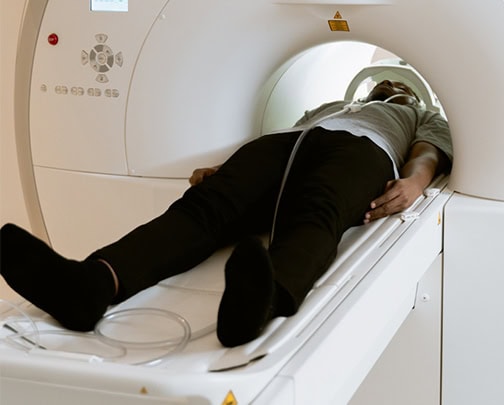
You do not always need an MRI before seeing a physiotherapist for persistent pain. A physiotherapist can assess your symptoms, movement, strength and function without imaging. An MRI may be considered when the findings could change treatment, symptoms suggest further investigation is needed, or progress has not occurred as expected.
Persistent pain can create an uncomfortable sense that something must have been missed. When discomfort continues for weeks or returns whenever you bend, walk, exercise or work, obtaining an MRI may seem like the most direct way to find the cause.
An MRI can provide detailed images of muscles, tendons, ligaments, joints, discs and other soft tissues. However, a scan is not automatically required before physiotherapy begins. In many musculoskeletal presentations, the first useful step is a clinical assessment that considers the symptoms alongside movement, strength, function and medical history.
The decision is less about how long the pain has existed and more about whether imaging is likely to provide information that changes the next stage of care.
Persistent Pain Does Not Automatically Mean a Scan Is Overdue
Pain lasting longer than expected can be unsettling, particularly when rest, medication or previous treatment has not helped. It is understandable to want visible proof of what is happening.
The duration of symptoms is important, but it is only one part of the clinical picture. A physiotherapist will also consider how the problem began, whether it is improving or worsening, which activities provoke it and whether there are symptoms suggesting that medical investigation should occur first.
Someone with shoulder pain after gradually increasing gym training presents differently from a person who cannot bear weight after a fall. Recurrent back stiffness without neurological symptoms also requires a different clinical response from rapidly increasing weakness or changes in bladder or bowel control.
For this reason, persistent pain does not lead automatically to the same imaging decision for every patient.
What a Physiotherapist Can Assess Without an MRI
An MRI shows anatomy. A physiotherapy consultation examines how the person is moving and functioning in real life.
During an appointment, an Adelaide physiotherapist may ask about the onset and pattern of the symptoms, previous injuries, general health, work demands, sport and treatments already attempted. The physical assessment may then explore movement, strength, balance, joint function and the body’s response to specific tasks.
This process can help the physiotherapist form a working clinical impression and decide whether physiotherapy is appropriate. It may also identify findings that should be discussed with a General Practitioner or another healthcare professional.
An assessment can provide information that a static image cannot, including:
- Which movements remain comfortable
- What load or position aggravates the symptoms
- Whether strength differs between sides
- How the problem affects walking, lifting or reaching
- Whether symptoms change with repeated movement
- Which everyday activities the patient wants to regain
- Whether there are clinical signs requiring further investigation
Treatment does not need to wait for a perfect explanation of every structure involved. When the presentation appears suitable for conservative care, rehabilitation can often begin with education, activity modification and appropriately graded exercise.
What an MRI Can and Cannot Tell You
Magnetic Resonance Imaging produces detailed pictures of internal structures without using ionising radiation. It can be valuable when a healthcare professional is investigating a suspected injury, disease process or structural change that cannot be adequately assessed through examination alone.
A scan may identify findings such as tendon tears, ligament injuries, disc changes, joint abnormalities or inflammation. The significance of those findings still needs to be interpreted in context.
Structural changes can appear on scans in people who have no symptoms. Conversely, a person can experience substantial pain and functional limitation without an MRI revealing one clear abnormality that fully explains the problem. This is one reason imaging results should not be interpreted separately from the patient’s history and physical examination.
An MRI also does not show how confidently someone can climb stairs, tolerate a working day or return to training. Those functional questions remain central to physiotherapy assessment and rehabilitation.
When Imaging May Become Relevant
There are situations where an MRI or another form of diagnostic imaging may contribute useful information.
Further investigation may be considered when:
- A significant traumatic injury is suspected
- Symptoms indicate possible involvement of a nerve or another important structure
- Severe or progressive weakness is present
- The clinical findings do not fit a typical musculoskeletal pattern
- Symptoms continue to worsen despite appropriate management
- A reasonable rehabilitation period has not produced the expected change
- Surgery or another procedure is being considered
- The result would alter the recommended treatment pathway
The appropriate test may not always be an MRI. Depending on the suspected condition, a healthcare professional may consider an X-ray, ultrasound, Computed Tomography scan or another investigation.
For uncomplicated lower back pain, routine imaging is not always required unless there is concern about a serious underlying condition or the result is expected to influence management.
Symptoms That Should Receive Prompt Medical Attention
Most musculoskeletal pain is not caused by a serious condition. Even so, certain symptoms require timely medical assessment rather than waiting for a routine physiotherapy appointment.
Seek urgent advice when pain is accompanied by:
- New loss of bladder or bowel control
- Numbness around the groin or saddle region
- Severe or rapidly increasing weakness
- Fever or feeling systemically unwell
- Unexplained weight loss
- Major trauma
- Chest pain or breathing difficulty
- Sudden inability to bear weight
- A hot, markedly swollen joint
- Symptoms that are rapidly deteriorating
This list is not a diagnostic tool. Patients who feel seriously unwell, are concerned about a sudden change or are uncertain about the urgency of their symptoms should contact an appropriate medical service.
What Happens When You Already Have Scan Results?
Patients can bring existing reports and images to their physiotherapy appointment. The physiotherapist can consider the findings alongside the clinical assessment and the activities affected by the condition.
The report should not be treated as a complete rehabilitation plan. Two people with similar MRI findings may have very different pain levels, movement capacity and goals.
For example, a scan describing rotator cuff changes does not by itself determine how much a person can lift or whether reaching overhead is manageable. Assessment and progressive rehabilitation remain important when addressing rotator cuff injuries.
Similarly, lower back imaging needs to be considered alongside symptom behaviour, neurological findings and function. Physiotherapy for lower back pain may involve graded movement, strength development and guidance about returning to usual activity, depending on the individual presentation.
When Previous Physiotherapy Has Not Helped
One unsuccessful treatment experience does not automatically establish that an MRI is necessary. It may mean that the condition, diagnosis, exercise dosage or broader management plan needs to be reconsidered.
A review should examine what treatment was provided, how consistently it was followed, whether the exercises were progressed and which outcomes were monitored. It should also consider whether the symptoms changed or whether the original clinical impression still fits.
Further investigation may be reasonable when progress remains limited despite an appropriate period of care. The important question is whether the scan is expected to clarify the treatment decision rather than simply confirm that pain exists.
Patients returning to sport may require functional testing and staged loading through sports physiotherapy even when imaging has already identified the injured tissue. A scan can inform care, but it does not replace the process of rebuilding strength, tolerance and confidence.
Questions to Discuss Before Requesting an MRI
A productive conversation with a physiotherapist or General Practitioner can focus on what the scan is expected to achieve.
Useful questions include:
- What are you concerned the MRI might show?
- Would the result change my current treatment?
- Is another form of imaging more appropriate?
- Can rehabilitation begin safely while the symptoms are monitored?
- What changes would make imaging more important?
- Who will explain the report in relation to my symptoms?
- What happens if the scan does not identify a clear cause?
These questions do not argue against imaging. They help ensure the investigation has a defined clinical purpose.
An Adelaide physio can assess whether a musculoskeletal presentation appears suitable for physiotherapy and discuss when medical review may be appropriate. The physiotherapist’s role is not to dismiss ongoing pain, but to interpret it carefully within the person’s broader clinical and functional picture.
Accessing Physiotherapy Across Adelaide
Pro Health Care provides physiotherapy services across Hope Valley, Mitcham, Kidman Park, Beverley, Aldinga, Dover Gardens, Henley Beach and Stirling, allowing patients to arrange assessment and follow-up care at a location suited to their work, family and rehabilitation needs.
The Next Step Depends on the Clinical Question
An MRI can be valuable when it answers a specific question and influences treatment. It is not, however, a universal entry requirement for physiotherapy.
Clinical assessment often provides enough information to begin an appropriate management plan while symptoms are monitored. When the presentation is unusual, worsening or not responding as expected, a physiotherapist can recommend that the patient consult a General Practitioner or another relevant professional about further investigation.
The aim is not to avoid imaging or obtain it as quickly as possible. It is to use the right assessment at the point where it can meaningfully guide care.
Disclaimer: This article provides general educational information about persistent musculoskeletal pain, physiotherapy assessment and Magnetic Resonance Imaging. It does not determine whether an MRI or another investigation is appropriate for a particular person. Seek personalised advice from a qualified physiotherapist, General Practitioner or relevant medical specialist, especially if symptoms are severe, changing or associated with other health concerns.